Sunday, January 16, 2011

This just in...


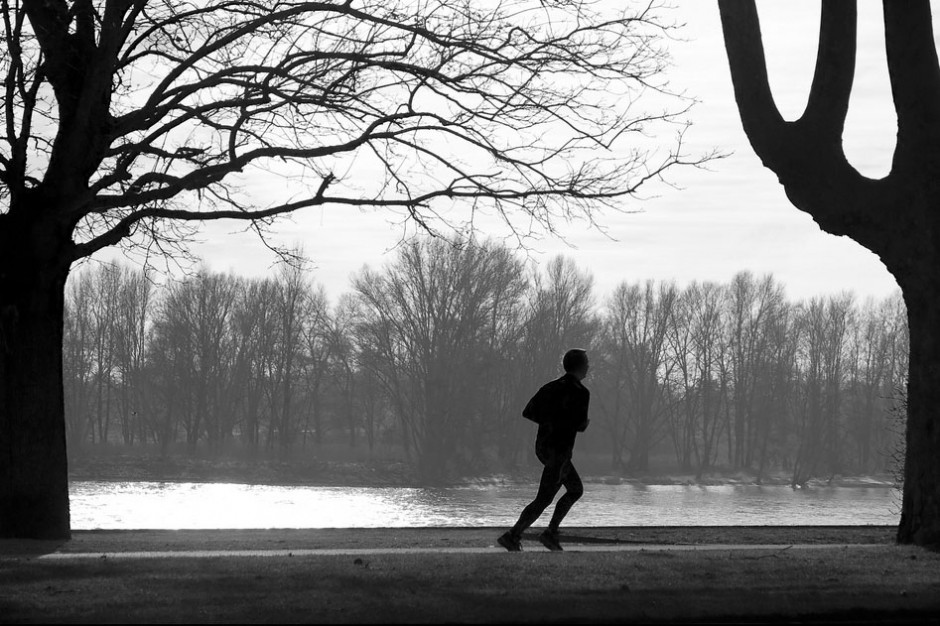
I was reading my Runner's World magazine (February issue) and was very happy to read that scientists have found more proof that running helps to keep us healthier and enables us to live longer. My first thought was...Duh!! Then I remembered that when I announced to friends and family that I was going to run a half-marathon that some felt that it would be dangerous to my well being. I would be injured or worse. You can only imagine what was said when in 1999 I committed to running a full marathon. Maybe the health benefits of running long distances is not widely accepted by our non-running friends and family.

Here are a couple of the things that Amy Rushlow noted in her article "It's All Good".

People who run more than 35 miles a week are 54% less likely to suffer age-related vision loss than those who cover 10 miles a week. I think I am living proof of this scientific discovery. I did not need reading glasses until I was 48 years old. I remember my optician telling me that it was perfectly normal for a man my age to need reading glasses and that she was surprised I didn't need them sooner. Thank you running.

Runners who log a weekly run of 10 miles (or more) are 39% less likely to use high-blood-pressure meds and 34% less likely to need cholesterol meds compared to those who don't go farther than 3 miles. During my annual physicals, my doctor always comments on my slightly below normal blood pressure. He is a runner too and believes that my dedication to my sport is helping me keep my blood pressure at a healthy level. In addition, by using some supplements like niacin, fish and flax seed oils, I have my cholesterol lower than it has been since I was diagnosed as borderline high 15 years ago. Thank you running.

British workers were surveyed on a day they worked out and a day they didn't. People said they made fewer mistakes, concentrated better, and were more productive on the day they were active. I wholeheartedly agree with this. I know that when I get to work after my morning runs I am ready to hit the ground running (no pun intended). I am very focused and am more productive than on days that I don't run or miss my run due to some scheduling conflict. This, of course, makes my boss happy. Thank you running.

People who exercise for an hour a day are less likely to suffer upper-respiratory-tract infections than those who are inactive, according to a study from Sweden. Moderate activity boosts immunity. Since I started running back in 1985, I can only remember 2 or 3 times that I was actually sick and could not work. Twice it was due to a sinus infection. I wasn't sick very often as a child. Therefore, it is hard to correlate my running with my ability to avoid upper-respiratory-tract infections. But, if this study is correct, my running has definitely contributed to my not missing work due to illness. Thank you running.

• A review of 22 studies found that people who work out 2.5 hours a week are 19% less likely to die prematurely than those who don't exercise. A separate study found that active people have a 50% lower risk of premature death. This is the best news of all. I run on average about 7 hours per week. This means the odds are in my favor that I won't die a premature death. Of course, I won't know since I will be dead. But, thank you running in advance of my ultimate demise.

The best thing about all of the above is that I can now say with conviction that running is the most beneficial thing that I can do each day to live a long and healthy life. We as runners should be telling our friends and family about this great news. The thing is that so many people I talk to about running tell me how much they hate to run and that it is boring. Maybe that's for the best. I don't want there to be too many people out there clogging up the roads and my peaceful running routes. It's bad enough we have to share the roads with the cars. Can you imagine if there were more runners out there? Sorry, that is not how we in the running community think. I am however on the fence about whether to go out and proselytize about running and all the great things it could do to improve other's lives. If I really think it through the best way to motivate others to start living a healthier lifestyle is to be a role model. Demonstrate my passion by getting out there and doing it. If I do, I am sure others will follow.

Jan. 1 – 9.50 miles (1:25:51, 9:02 pace)
Jan. 2 – 9.10 miles (1:22:55, 9:03 pace)
Jan. 3 – 6.20 miles (57:27, 9:16 pace)
Jan. 4 – 4.50 miles (36:35, 7:58 pace) – Speed Work
Jan. 6 – 6.20 miles (50:38, 8:10 pace) – Tempo Run
Jan. 7 – 6.10 miles (56:27, 9:15 pace)
Jan. 8 – 8.30 miles (1:15:35, 9:06 pace)
Jan. 9 – 10.10 miles (1:34:27, 9:21 pace)
Jan. 10 – 6.00 miles (55:57, 9:20 pace)
Jan. 11 – 4.50 miles (36:34, 8:08 pace) – Speed Work
Jan. 13 – 6.20 miles (50:14, 8:06 pace) – Tempo Run
Jan. 14 – 6.20 miles (56:30, 9:07 pace)
Jan. 15 – 8.50 miles (1:14:07, 8:43 pace)

Total Miles: 91.40 miles
2011 YTD Miles: 91.40 miles

Sunday, January 2, 2011

Find Balance This Year

The world and I have completed another trip around the sun. At the end of the trip is this new post which happens to be the 100th post since I started writing down my thoughts about running and life. As I looked back over my previous posts, I noticed a post where I discussed the meaning of numbers in our lives and more specifically looked for meaning in the bib number I was given by the B.A.A. for the 2009 Boston Marathon. It made me want to see if the number 100 had any significance. Since I believe that numerology can teach us, I had a feeling that there would be a significance to the number 100.

As I discussed previously, each letter in the Hebrew alphabet has a numerical value. The numerical value of a word is determined by adding up the values of each letter. In this case, the number 100 is represented by the Hebrew letter kuf. I did a little research and found that the letter kuf when written is composed of two separate parts (see picture). It is said that this represents our ability as people to deal with heart wrenching loss and also be able to open our hearts to those in need. It also symbolizes that we are a broken vessel looking to be made whole again or holy, if you will. Therefore, I believe that this is a sign telling me that I need to look at my life as a series of letting go and embracing that which is new. This is never easy especially if it means having to say goodbye to a loved one when they leave this earth.

As we live our lives, we find that we all have to sacrifice something as we travel life's path. We as runners have to sacrifice time with our friends and family when we are out on the road training for our races. The word sacrifice can be defined as a way to make something sacred. The Jewish mystics would say that the letter kuf is calling on us to make a sacrifice and to repay to the source of all things (God) for that which we take out of life as we travel around the sun. If we never repay that debt as we go along we are, in a sense, breaking the circle of life. By breaking this circle, we and those around us become unbalanced. We need to find ways to maintain that balance especially when it comes to our running life.

Kuf also represents receptivity in our life. The broken letter shows us that in order to maintain balance we need to open our hearts and minds to new ideas, inspirations and teachings. It is said that if you focus on the letter kuf in a meditative way that you can increase your spiritual receptivity. Through this meditation, kuf can help you reduce your focus on the trivialities in your life and be more receptive to sanctity. As you look at the letter, you can see that it dips below the line of writing. In mystical circles, this symbolizes the ability to remove power from the negative side of the universe. If we can remove the negativity from our life we can regain control and find the balance we need. In a sense, kuf symbolizes two worlds, the good and the bad, life and death. Therefore, if we want to truly be happy we need to try and remove depression and sadness from our lives and instead focus on joy and fulfillment.

I have come to realize that my spiritual journey of transformation requires that I get to know who I really am and to try and understand and accept the unique combination of my personality and character traits. If I can truly learn who I am and what I can do to remove negativity from my life then I can regain the balance I need and hopefully uncover what my gift to the world should be. This balance should allow me to be more fulfilled in the coming year and find true joy and happiness.

I wish you all a year filled with prosperity, joy and happiness. See you on the road.

Dec. 19 – 8.50 miles (1:18:23, 9:13 pace)
Dec. 20 – 6.20 miles (55:25, 8:56 pace)
Dec. 21 – 4.00 miles (33:20, 8:04 pace) – Speed Work
Dec. 23 – 6.20 miles (49:21, 7:58 pace) – Tempo Run
Dec. 24 – 6.60 miles (56:20, 8:48 pace)
Dec. 25 – 8.10 miles (1:12:40, 8:58 pace)
Dec. 26 – 14.40 miles (2:17:02, 9:31 pace)
Dec. 28 – 4.00 miles (32:26, 8:09 pace) – Speed Work
Dec. 30 – 6.20 miles (50:15, 8:06 pace) – Tempo Run
Dec. 31 – 6.10 miles (53:22, 8:45 pace)

Total Miles: 70.30 miles
2010 YTD Miles: 1,746.50 miles
(I averaged 33.5 miles per week this year)

Thursday, December 23, 2010

All American Runner...me???

It is funny how we as individuals do not seem to age. Well, that is not true. But, we don't seem to age in our mind. You may wonder why I am bringing this up. It is simple, I read a lot about running in magazines, books and on-line. I occasionally come across descriptions of runners where they are called a "masters runner". Naturally, I assumed that a masters runner is someone much older than me. I imagined that you crossed over into the masters runner category when you turned 50.

Now, I don't want to burst any of your bubbles out there but you officially become a masters runner for road races at...40. 40!?! I have been a masters runner for almost 10 years now? I only ran one marathon as a "youth"? I have to say, I don't feel old enough to be a masters runner. I figured I had at least until my birthday in September before I would have to admit I was one of the older runners out there on the road. Not to mention the fact that I would inevitably receive my invitation to join AARP. Ugh! This was quite a blow to the ego when I found this little tidbit of information recently.

I decided to look into it a little further. I found a really nice website for National Masters News magazine (www.nationalmastersnews.com). I found out that even at my age I could become an All American Runner albeit in the masters category. In fact, in 2009 I ran a 5k in 21:19 which at age 48 was under the All American Standards of Excellence in Road Running (Men) of 21:49. I can honestly say that I never felt that I would be able to call myself an All American runner. I won't be publicizing it widely. But it is something to be excited about, right?

When I turn 50 in September, I will be shooting for some new PRs and more All American qualifying times. They are acheivable with the right training. I am not sure about the marathon time but it is worth shooting for as it would allow me to qualify for Boston.

All American Standards of Excellence
Road Running - Men
Age 50-54

5K - 22:42 - 7:19 per mile pace
10K - 47:16 - 7:37 per mile pace
Half Marathon - 1:37:38 - 7:27 per mile pace
Marathon - 3:35:09 - 8:21 per mile pace

As I contemplate my being a masters runner, I realized that the one thing I have going for me is my consistency. It has allowed me to run in all kinds of races and enjoy the challenge of each one while having fun and remaining healthy. I also have learned that as I get older, I can train rigorously as long as I take the requisite rest days. I am still running 6 days a week and logging good mileage. But, if I don’t feel good on a run, I simply slow down and take it easy. I know that the next run will be better. As long as I am consistently getting out on the road, I won’t lose my focus when I am ready to start seriously training for the next race.

I have also learned to set my training goals carefully. The goals I shoot for are challenging yet achievable. As you know, I set a pretty aggressive goal for the Boston Half Marathon and was a bit disappointed in not being able to reach it. Sometimes, we all set goals which are too lofty or unattainable and that they have a detrimental impact on our psyche. If we let it get too ingrained, we can lose motivation and might even choose to give up the sport we love. That is why I always set an attainable and a stretch goal. It allows me to walk away from a race feeling good about the effort even if I don’t hit my higher target goal.

The biggest challenge I found over the years is the need to manage my time well. Before having kids and a career, I didn’t have the same outside commitments as I do now and could devote more time to my running. Unfortunately, at that time in my life I didn’t dedicate the time to it. It may be why now I am an injury free runner due to the fact that I didn’t beat up my body when I was younger. To manage my time, I am a bit OCD about my running schedule. I plan out my workouts carefully and try my best to not waste any time during the workout. This way I can meet my training goals without sacrificing time with my family and friends and not detract from any of my work obligations.

I now need to think like a masters runner. I need to do a better job of regularly taking scheduled breaks from competing in big races. This year it happened naturally with some of my other outside commitments. But, I do want to train for and race in another marathon. As you know, training for a marathon is very time consuming and taxes us as runners both physically and mentally. Therefore, to remain healthy and not burn out, I am going to taking periods of time each year where I am just running for the sheer joy of it.

I would like to wish all of you and your families a most joyous holiday season and a very happy and healthy New Year! Run long my friends.

Dec. 5 – 8.00 miles (1:12:21, 9:03 pace)
Dec. 8 – 6.10 miles (54:49, 8:59 pace)
Dec. 10 – 3.10 miles (27:20, 8:49 pace)
Dec. 13 – 6.10 miles (54:20, 8:55 pace)
Dec. 14 – 3.50 miles (28:12, 8:04 pace) – Speed Work
Dec. 16 – 6.20 miles (49:34, 8:00 pace) – Tempo Run
Dec. 17 – 6.10 miles (56:48, 9:19 pace)
Dec. 18 – 10.00 miles (1:30:19, 9:02 pace)

Total Miles: 49.10 miles
2010 YTD Miles: 1,676.20 miles

Thursday, December 9, 2010

Stretching to Run


As 2010 starts to wind down, I have begun thinking about what it is going to mean to me when I turn 50 in September 2011. I can remember as a kid thinking that 50 is ancient. Looking at it from this vantage point is very different. I find it hard to believe that I will be 50 years old in about 10 months. If you had asked me when I was growing up, I can say with certainty that I was not thinking about being in shape to run a marathon at 50. I was hoping to not be on oxygen.

As I have discussed in a previous post, most experts will tell you that as you age your running is affected in a negative way. Yet, I posted my marathon P.R. at the age of 48 and am actually running consistently faster than when I was running 5 and 10Ks in my mid-20s. I attribute some of my improvement to the fact that I was not really pushing myself when I was younger. Therefore, I never suffered any major injuries or setbacks that could potentially affect me as an older runner. I also think that I have learned a lot more about training and thus have improved because I am training smarter and more consistently than in the past.

With all that said, I still can't help but start to think that my days of setting PRs are going to be behind me when I reach the 50 milestone. There is no doubt that your body will not respond as readily when you are my age as when you are in your 20s and 30s. Regardless, I know that there are two specific things that helped me reach goals I never thought possible. I lost weight and increased my flexibility. I don't need to go into a long discussion about weight loss. We all know that if you carry extra weight on your body it makes your heart work harder and you are going to be slower out there on the road. Flexibility on the other hand is something most weekend or mid-pack runners ignore as part of their routine but can profoundly help you stay healthy and on the road.

To become more flexible, I first started to consistently stretch after each and every run. I was and am still using what is known as static stretching after my runs. Static stretching is defined as "placing your body into a position whereby the muscle (or group of muscles) to be stretched are under tension. Both the opposing muscle group and the muscles to be stretched are relaxed." (http://www.criticalbench.com) I make sure I stretch my calf muscles, hamstring, quads, and the piriformis. You can find many different stretching routines that will allow you to keep all of these key muscle groups loose and flexible. It took me several different tries before I found the six stretches that work for me. Here is my post run routine:

Gastroc Stretch

The gastroc muscle is the muscle that actually propels you when you run. Place both palms against the wall with the leg you want to stretch back, several feet from the wall. Make sure you keep your heel firmly positioned on the floor. Place your other leg about halfway between your back leg and the wall and bend your knee. Keeping your back straight lean forward until you feel the stretch in your calf. I hold this for 45 seconds and then switch legs. I do 2 sets.

Soleus Stretch

Until about 3 years ago, I never stretched this muscle. It is the other calf muscle and is located in front of the gastroc muscle. This muscle is the one that helps you plant your foot and push off while you run. This one took a little effort to get right. You start in the same position as the gastroc stretch with your back straight and palms against the wall. The difference is that you bring your leg back towards the wall about half way and bend your knee. You need to drop your butt until you start to feel the stretch in your lower calf. Once you get the hang of it, it is actually an easy stretch. I hold this for 45 seconds and then switch legs. I do 2 sets.

Quadriceps Stretch

This is one of the most common stretches you see when you are around other runners. You simply place your hand on the wall to steady yourself and then grab your leg around the ankle and lift it toward your butt. The key to doing the stretch correctly is to keep your back straight and to not let your knee get ahead of your stance leg. I have started doing this without steadying myself against something. It makes the stretch harder to do but has improved my balance. I hold this for 45 seconds and then switch legs. I do 2 sets.

Hamstring Stretch

I have always had trouble with tight hamstrings. I have been doing 3 different stretches. First, I put my foot on a waist-high stationary object and then lean forward until I can grab my toes with my hand. I hold this for 45 seconds and then switch legs doing 2 sets. Next, I cross one foot over the other and then slowly lean forward and reach down until I feel a stretch in my hamstring. I switch feet and do it again. Then I do the stretch again with my feet parallel. I hold each stretch 45 seconds and do only one set. I finish my hamstring stretches lying on my back. I keep my back flat against the floor and my alternate leg stretched out and also against the floor. Then I grab the back of one thigh with both hands and pull it into a 90-degree position vs. the floor. I hold this for 45 seconds and then switch legs. I do 2 sets.

Downward Facing Dog

This is a yoga pose that helps to stretch my back, shoulders, hips and calf muscles. I start on my hands and knees. Next I set my knees directly below my hips and place my hands slightly forward of my shoulders. Next I lift my knees away from the floor. I push myself up into a "v" position with my hands and feet flat against the floor. I straighten my knees but do not lock them. I hold my head between my upper arms and don't let it hang. I hold this for 45 seconds.

Piriformis Stretch

The piriformis is a deep muscle located beneath the butt (gluteal) muscles. The piriformis muscle laterally rotates and stabilizes the hip. It is more important for athletes participating in sports that require a lot of changing of direction like tennis. But, it is equally important for runners because a healthy piriformis muscle that is both strong and flexible will keep your hip and knee joints properly aligned during your runs. To stretch this muscle, I lie on my back, cross my legs as if I am sitting in a chair and then grab the under leg with both hands. Next I pull the knee toward my chest until I feel the stretch in my butt and hips. I hold this for 45 seconds and then switch legs. I do 2 sets.

Leg Up the Wall

My final stretch is actually a yoga pose. This is very simple. I lie on my back. I pull my butt up as close to the wall as I can until both legs are at a 90 degree angle up the wall. I keep my legs relatively firm, just enough to hold them vertically in place. I hold this position for 5 minutes.

Recently I have started to do some dynamic stretching prior to my run. I had read that doing a few dynamic stretches prior to running will help to warm up your muscles prior to heading out for a run. I first saw a couple of these routines when I watched my son and his track team warm up before their races. These stretches increase your heart rate and body temperature and put your body through the range of movement it is going to perform during your training run albeit a little exaggerated. I only do four exercises before heading out. There are many more you can find out on the internet if you want to look into it further. Before heading out I do the following:

Small Lunges

This one is very simple. You place your hands by your head and squeeze shoulder blades together. Next brace your stomach and back. Take small steps forward dropping your back knee to about 6 inches from the ground and keep your front lower leg vertical as you do the lunge.

High Knees

I see this done at almost every race I have ever run. In reading up on this particular exercise, I learned that the real aim is to be light on your feet. As you do the exercise you need to lift your knees to a fairly high level without leaning backwards. Remember to take short steps.

Heel Flicks

This one is almost the opposite of the high knee routine. You need to take short steps lifting your heels up and trying to kick yourself in the butt.

Back Stretch

I have had some tightness in my lower back when I am running. So, to loosen it up prior to my run, I do a lower back bend forwards and backwards keeping my back straight. If you try it, make sure that you move with deliberate movements. Don't bounce. If you bounce, you could potentially pull a hamstring muscle.

Each of the four exercises I do for about 2 minutes and then head out for my run. I have found that even this short little routine helps warm me up (especially when it is cold) and gets me ready for the run. Try it out. You may find that it improves your runs and your overall flexibility over time.

Nov. 21 – 8.30 miles (1:13:38, 8:52 pace)
Nov. 22 – 6.20 miles (52:48, 8:31 pace)
Nov. 23 – 3.50 miles (27:57, 7:59 pace) – Speed Work
Nov. 24 – 6.10 miles (54:05, 8:52 pace)
Nov. 26 – 7.00 miles (1:00:14, 8:36 pace) – Tempo Run
Nov. 27 – 11.20 miles (1:38:05, 8:45 pace)
Nov. 28 – 8.30 miles (1:16:57, 9:16 pace)
Nov. 29 – 6.20 miles (56:15, 9:04 pace)
Dec. 1 – 6.10 miles (54:45, 8:59 pace)
Dec. 4 – 10.10 miles (1:33:02, 9:13 pace)

Total Miles: 73.00 miles
2010 YTD Miles: 1,627.10 miles